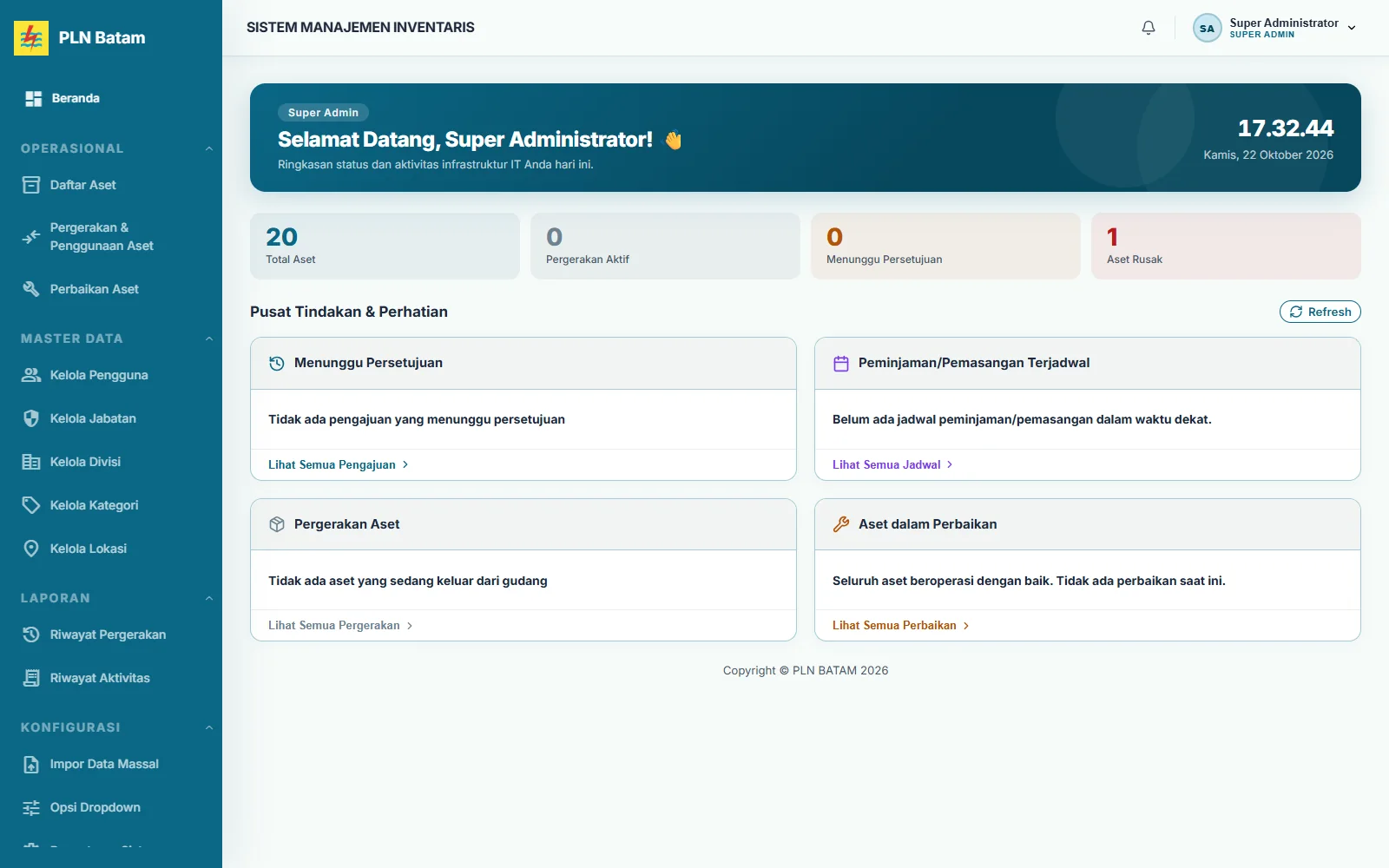
PLN Batam Asset Inventory
IT asset lifecycle management for an electric utility - from procurement to disposal, with a complete audit trail.
- Role
- Sole developer
- Year
- 2026
- Status
- Private
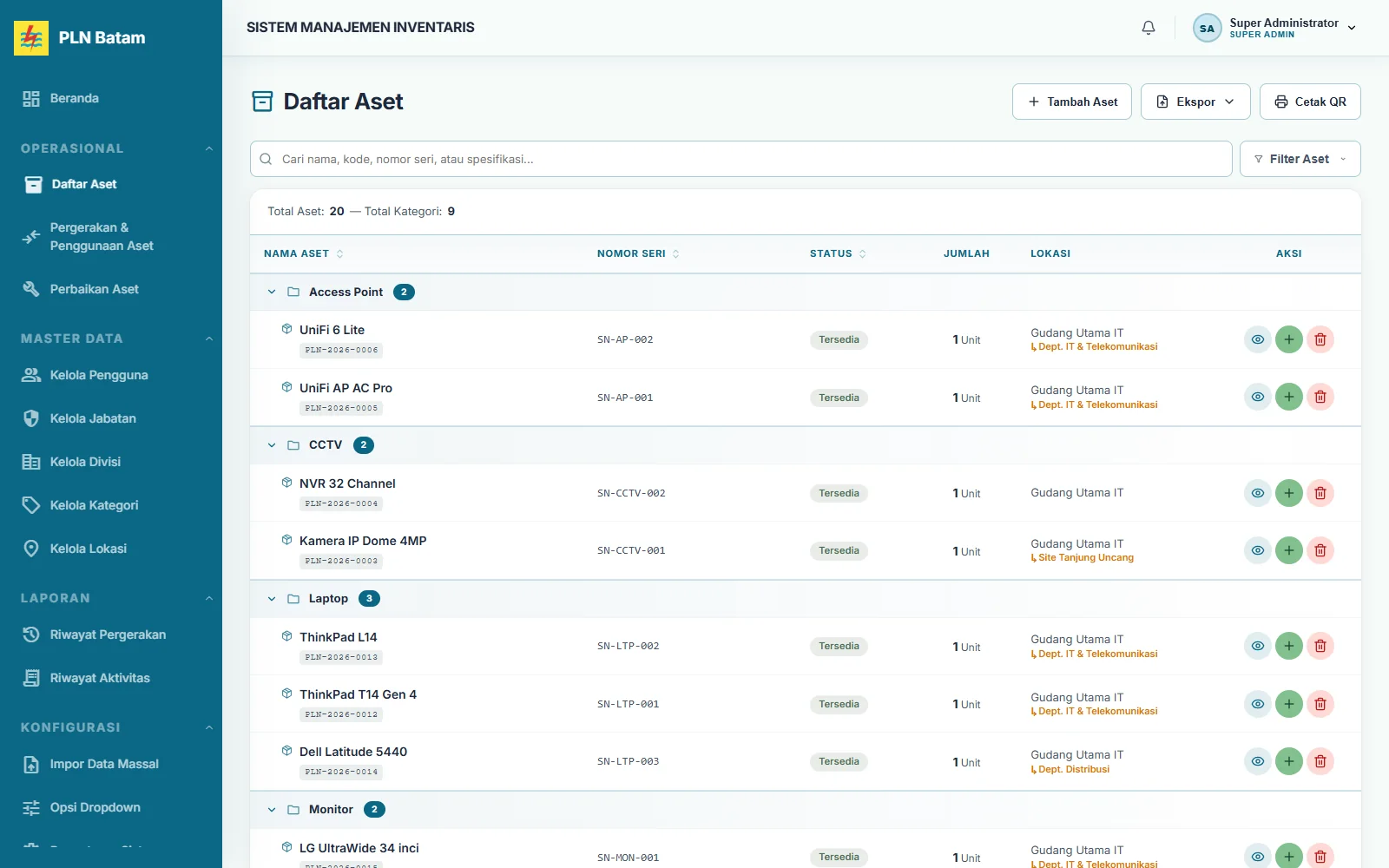
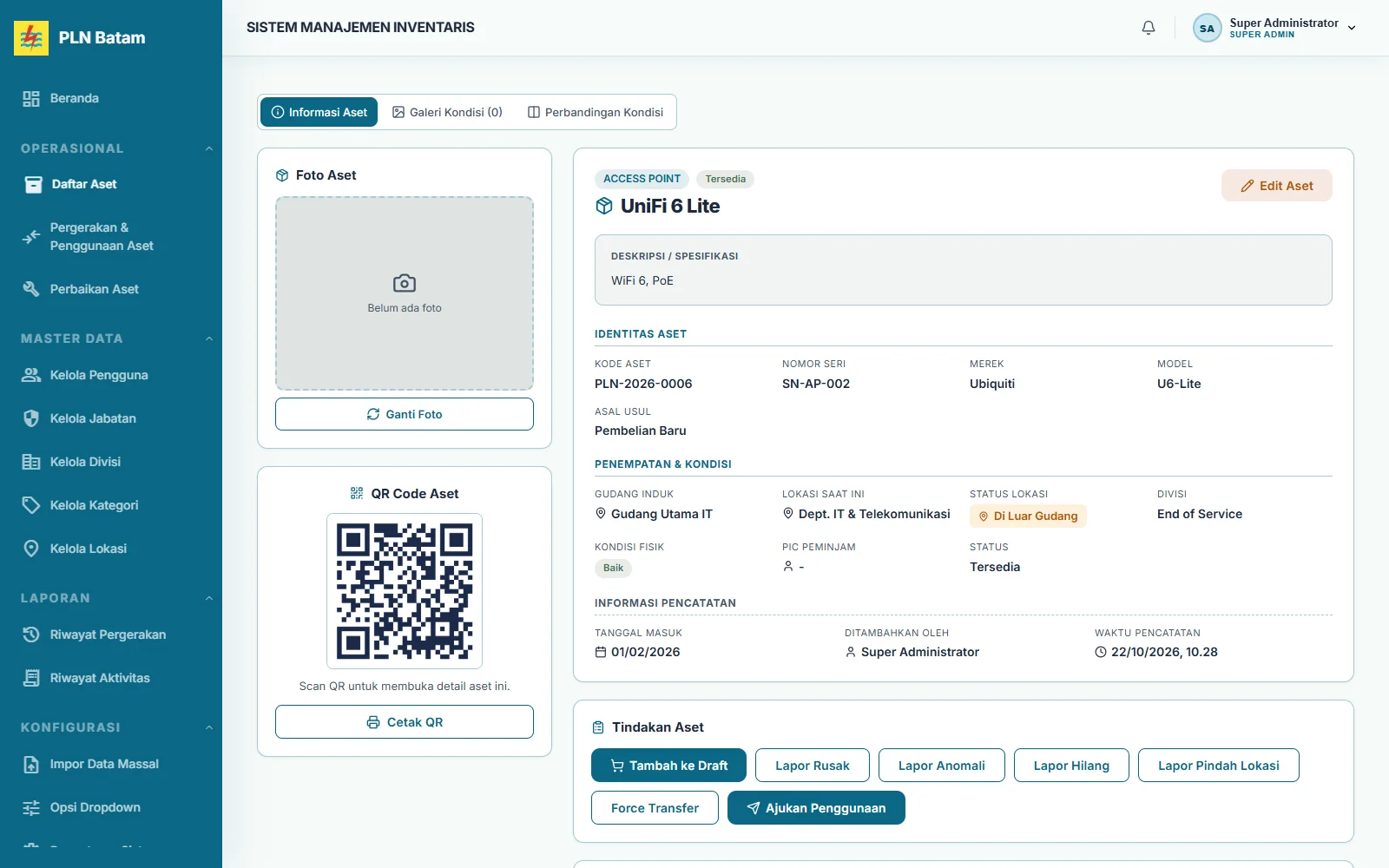
Private repository — source code is not published. Screenshots and architecture below come from the running system.
The problem
IT assets at an electric utility change hands constantly: borrowed by technicians, installed on site, shipped to vendors, repaired, or retired. Spreadsheet records turned a simple question — “where is this UPS serial number right now?” — into a multi-day investigation.
Worse: without an audit trail, asset movement cannot be accounted for during an inspection.
What was built
Two asset kinds in one system. Individual assets (servers, CCTV, laptops) are tracked by serial. Bulk assets (UTP cable by the metre, fibre by the roll) are tracked per unit with automatic remaining-quantity calculation. Both share the same loan, repair, and transfer flows.
Tiered approval. High-value loans pass through two stages: supervisor, then warehouse admin. Every approval records time and identity.
Photo evidence as part of the flow, not an attachment. Pickup and return require condition photos. Images are compressed server-side, stored under traceable names, and shown in the asset movement history.
An audit log that cannot be erased. Every sensitive action writes to an audit table protected by triggers. A separate archive keeps historical rows so the working table stays lean.
Three layers of access control. Page permissions, feature permissions, and approval authority are separate. Adding a role needs no code change.
Architecture
client/    React 19 + Vite — 25 pages, no UI framework
server/    Express — 16 route modules, JWT, TOTP 2FA, sharp (photos)
           PostgreSQL 16 — 30 tables + audit triggers + report views
scripts/   update.ps1 — rollback.ps1 — status-check.ps1
The app runs as a Windows service (NSSM) on an internal VPS. The update procedure includes a database backup before migration and rollback to a specific commit — because re-auditing asset data after a failed migration is not an option.
Decisions that mattered
- PostgreSQL over MySQL. Audit triggers, constraints, and
jsonbfor dropdown configuration are far more compact than the alternatives. - Dropdowns as data, not enums. Units, conditions, location types, and roles live in a configuration table. The organization changes its own vocabulary without a release.
- Configurable asset code format.
PLN-{YYYY}-{SEQ}lives in system settings, so numbering can follow internal policy. - Response-shape tests, not just status codes. Twenty-eight test files assert API response contracts, because what breaks the frontend is not a 500 — it is a missing field.
Outcome
The system is used internally to track assets across warehouses and project sites. The repository is private because it contains organizational configuration.
Highlights