Kasir-AI v2
Offline-first point-of-sale for cafes and restaurants - runs on the cashier device and stays correct when the network drops.
- Role
- Architect & sole developer
- Year
- 2026
- Status
- Private
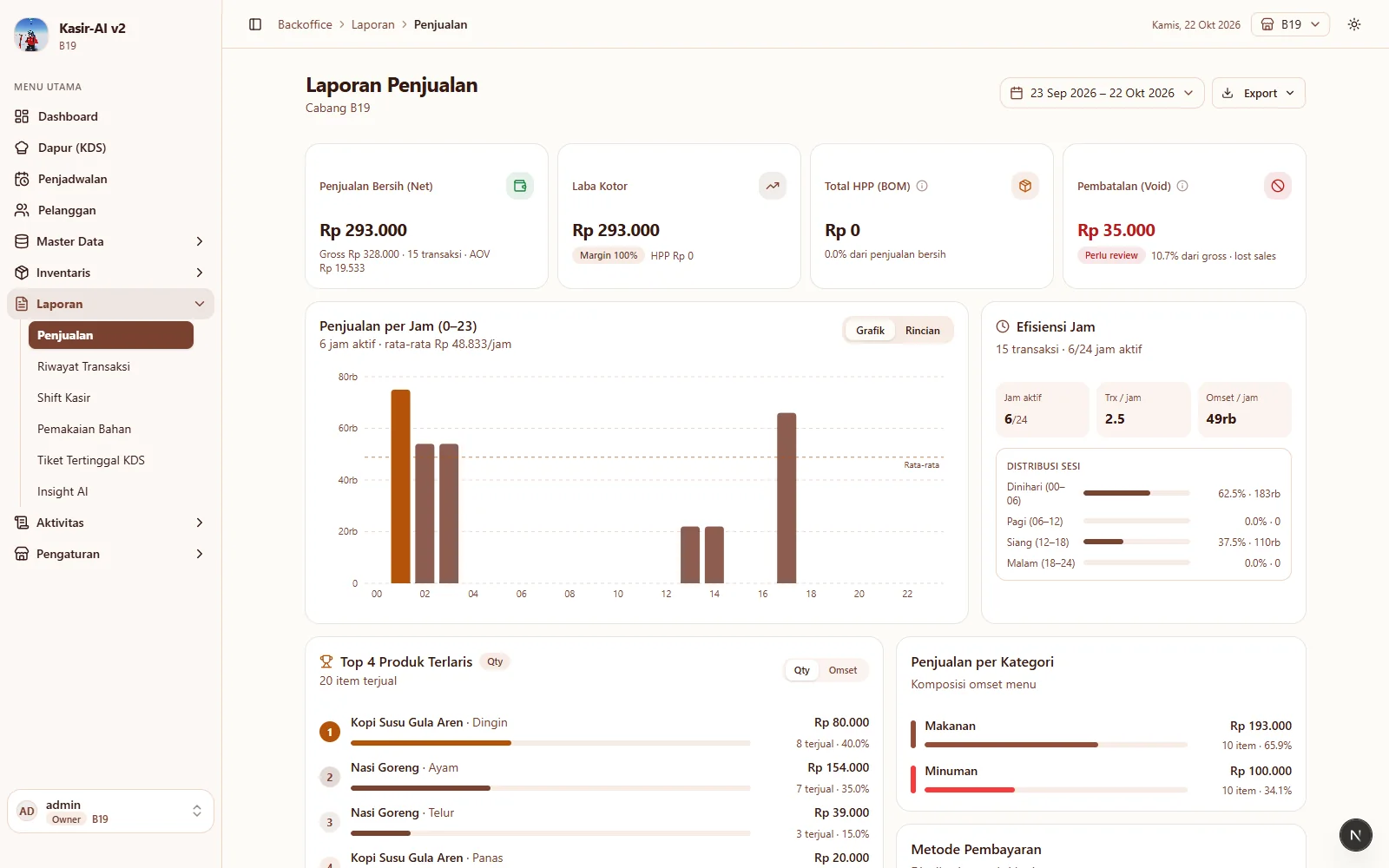
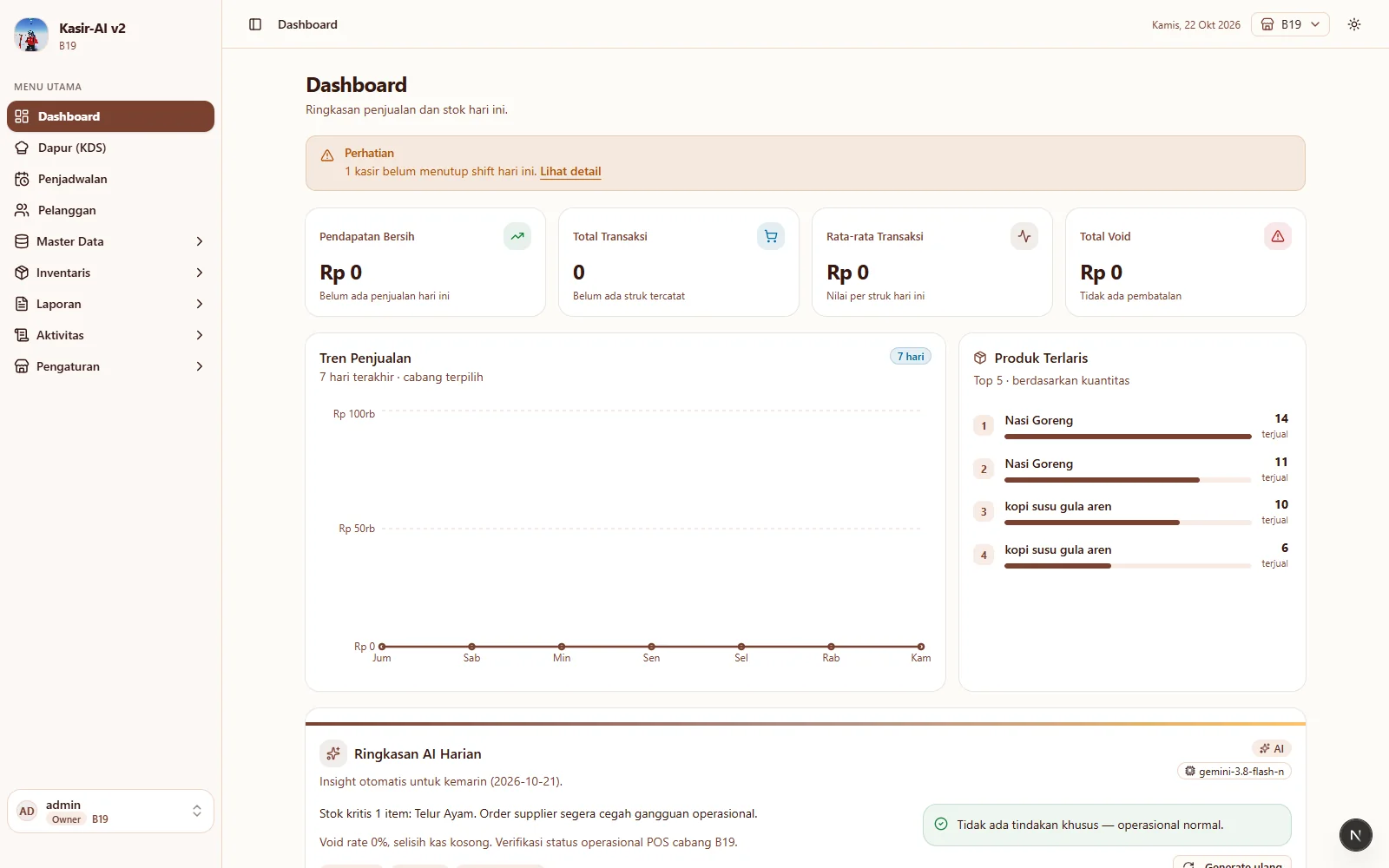
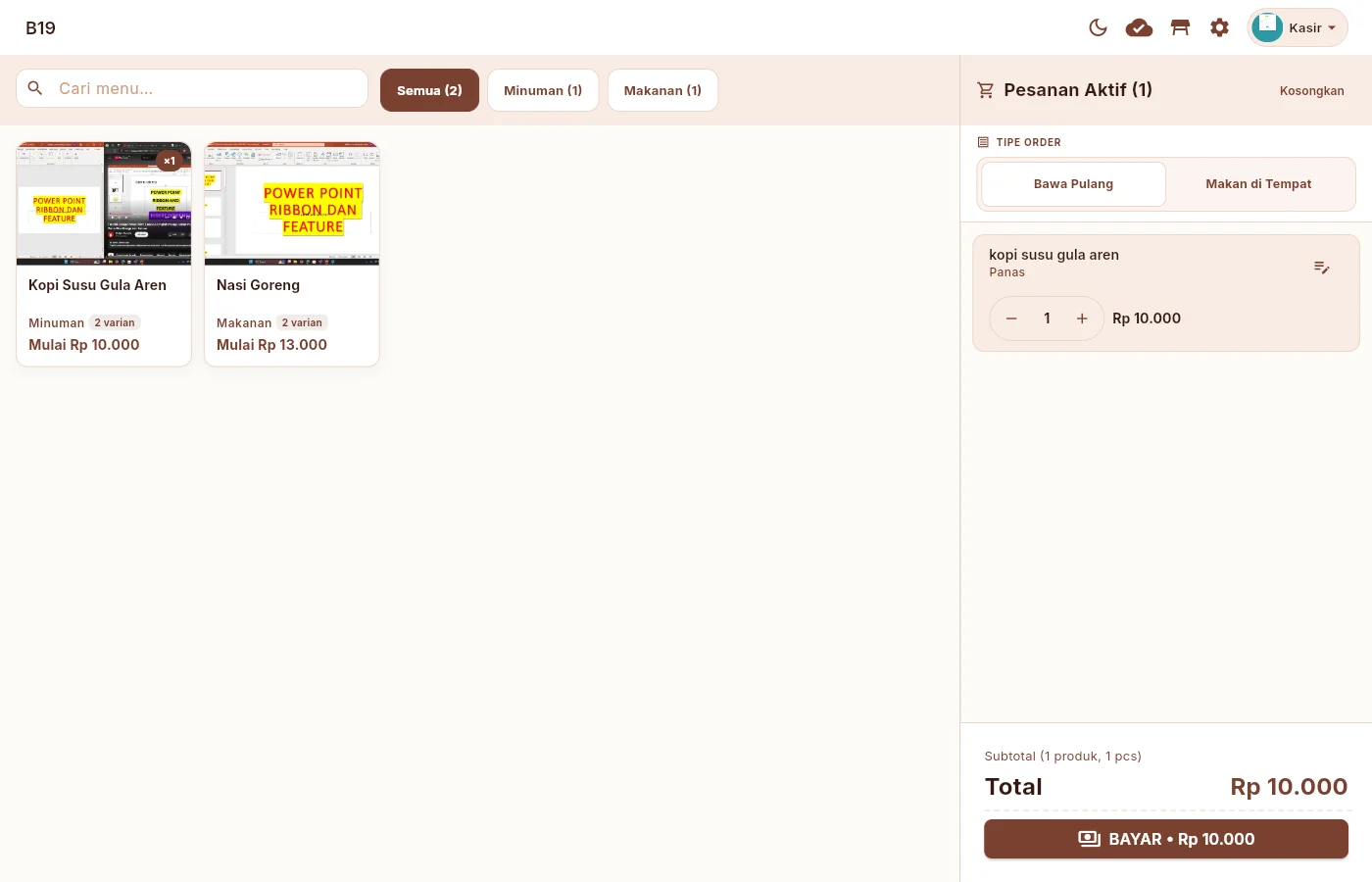
Private repository — source code is not published. Screenshots and architecture below come from the running system.
The problem
Caf— cashiers lose sales whenever the internet drops. Fully server-dependent web POS systems stop working exactly when the queue is longest — and the owner has no idea how much money should have come in.
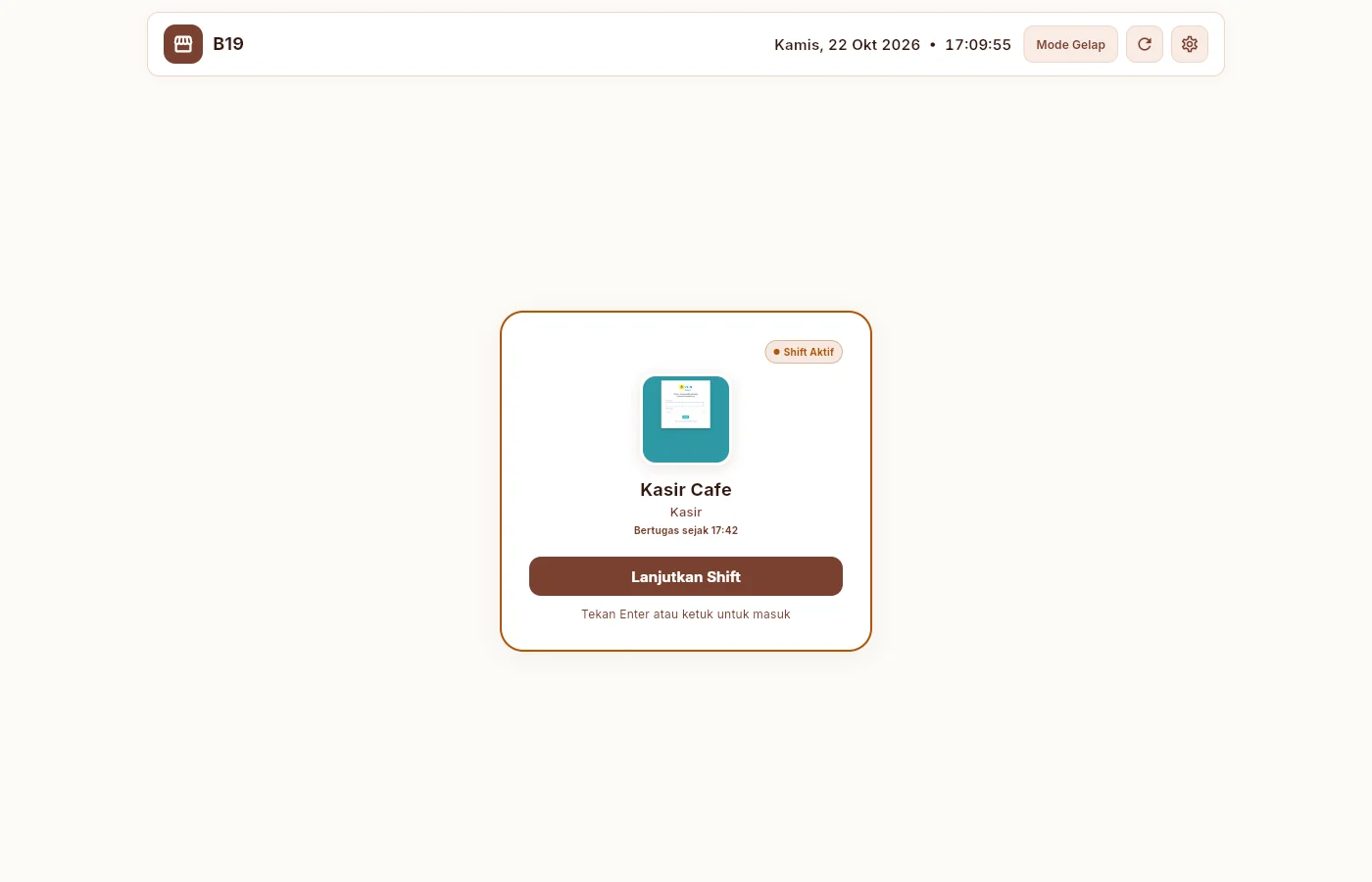
Kasir-AI v2 is designed on the assumption that the network cannot be trusted. The cashier device must open a shift, sell, print receipts, and close the shift without ever reaching the server.
Approach
Offline-first on the device. The Flutter app keeps products, orders, and shifts in SQLite via Drift. Every transaction is written locally first, then enters a sync queue. That queue survives force-quits and dead batteries.
The server is the source of truth, not the critical path. The NestJS API accepts batches from the queue, re-validates stock, and returns conflicts explicitly. The cashier never waits on a server round-trip to finish a sale.
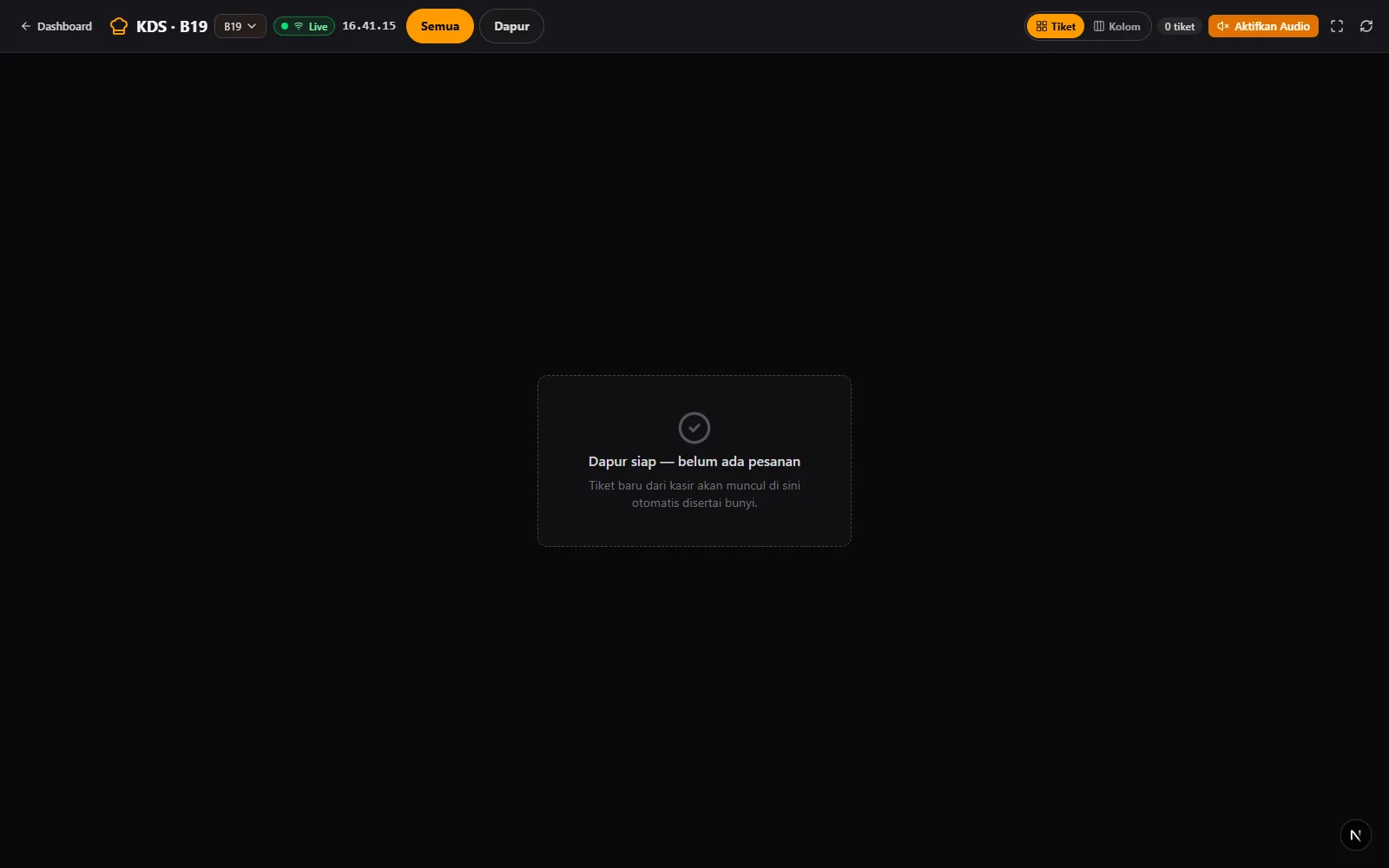
Realtime only for what cannot wait. Socket.IO carries kitchen tickets (KDS) and cross-device notifications. If the socket dies, the app keeps running and reconciles later.
Money is never casually rounded. All amounts are stored as integer rupiah. Tax, discount, and change calculations live in one shared module used by both server and client, so receipts and reports never disagree.
Architecture
apps/
  api/          NestJS 11 — 27 modules, Drizzle ORM, PostgreSQL, Redis
  backoffice/   Next.js 16 — 13 dashboard areas (products, staff, reports, KDS)
  pos/          Flutter — 14 features, Drift (SQLite), Bluetooth printing
infra/
  docker-compose.yml  postgres — redis — api — backoffice — nginx
Deployment is a single docker-compose.yml. Postgres and the API expose no host ports — only nginx is public, with separate volumes for uploads and scheduled backups.
Decisions that mattered
- Drift over key-value storage. The cart needs relational queries (variant pricing, ingredient stock, per-category discounts). Storing it as JSON would force business logic to be rewritten on the client.
- Drizzle over decorator-based ORMs. The schema stays TypeScript, but generated migrations are readable and editable by hand — important when a money column gets the wrong type.
- Idempotent transaction keys. Each order carries a
clientGeneratedId. The server rejects duplicates, so retrying the queue never creates a second receipt. - Shift as a transaction boundary. Opening and closing a shift is not a bolt-on feature; it is what explains cash variance and anchors the daily report.
Outcome
The system runs in a branch environment with Android devices and Bluetooth thermal printers. Field testing covered total network loss, two cashiers on one branch, and shift close with a cash variance.
The repository is private because it contains operational configuration and data. Screenshots on this page come from the running system with sample data.
Highlights